
In the vast tapestry of the English language, there exists a treasure trove of words that can transform your everyday communication into something truly extraordinary. These fancy words, often referred to as “ten-dollar words” or “SAT words,” have the power to elevate your writing, enhance your speech, and leave a lasting impression on your audience. Today, we’ll embark on a linguistic journey to explore some of the most captivating fancy words and their meanings, including a special section on polite alternatives to less flattering terms.
The Allure of Fancy Words
Fancy words are those that go beyond the ordinary, offering a more precise, nuanced, or sophisticated way to express an idea. They’re the linguistic equivalent of a finely tailored suit or a gourmet meal – not necessary for everyday use, but perfect for those occasions when you want to make a statement.
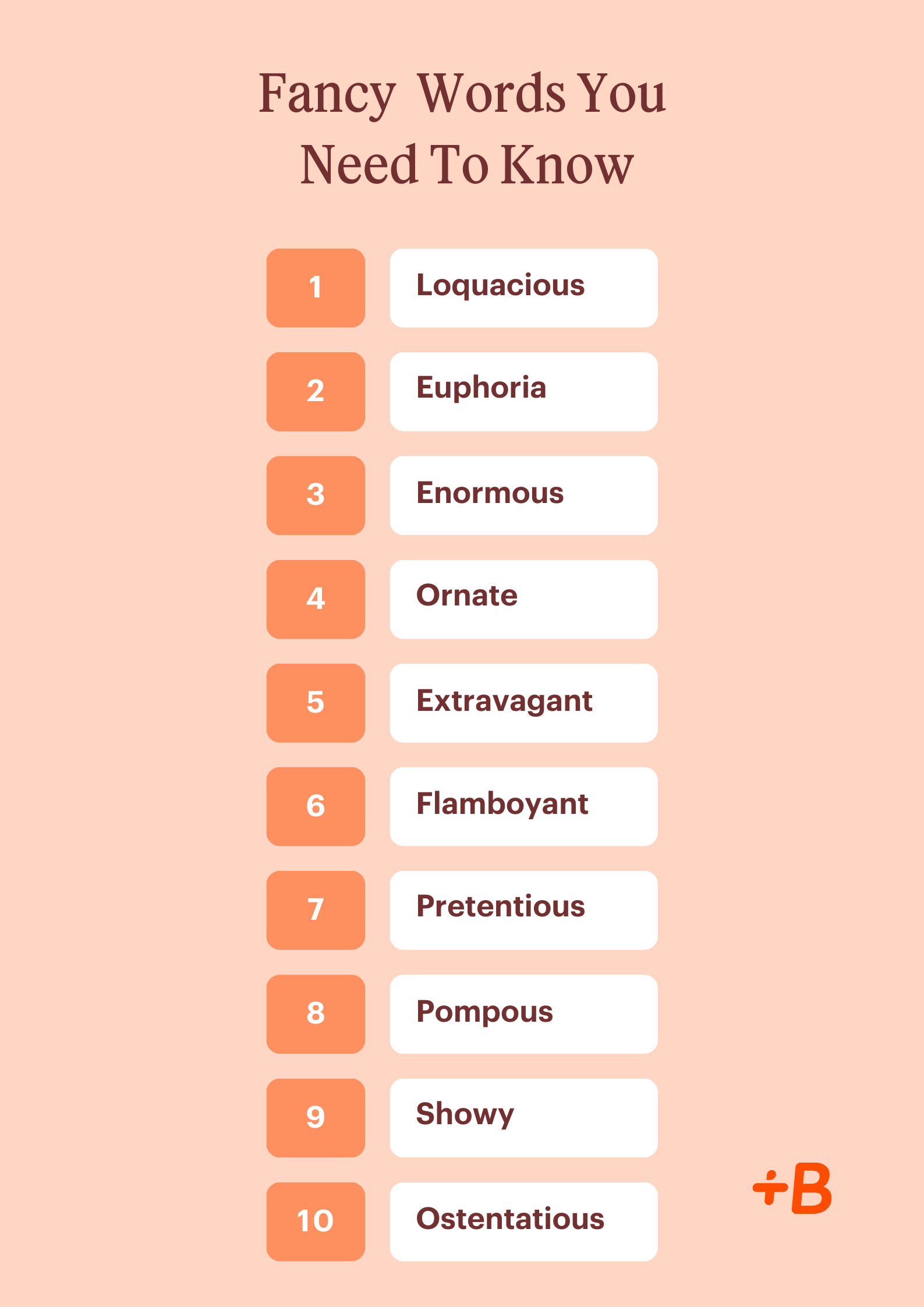
- Loquacious: This term describes someone who is excessively talkative. Instead of simply saying “chatty,” you could say, “My loquacious neighbor never seems to run out of stories.”
- Euphoria: A feeling of intense happiness and excitement. “The team’s victory filled the stadium with an air of euphoria.”
- Ornate: Elaborately decorated, often excessively so. “The palace’s ornate architecture left visitors in awe.”
- Flamboyant: Tending to attract attention because of one’s exuberance, confidence, and stylishness. “The flamboyant performer captivated the audience with his dazzling costume and energetic dance moves.”
- Ostentatious: Characterized by vulgar or pretentious display; designed to impress or attract notice. “His ostentatious display of wealth made many of his colleagues uncomfortable.”
- Extravagant: Lacking restraint in spending money or using resources. “The extravagant gala featured ice sculptures and a champagne fountain.”
- Pretentious: Attempting to impress by affecting greater importance or merit than is actually possessed. “His pretentious remarks about fine wine fell flat when he couldn’t distinguish between varieties.”
- Pompous: Affectedly grand, solemn, or self-important. “The pompous official spoke in long-winded sentences, clearly enamored with the sound of his own voice.”
Showy: Making a striking display; ostentatious. “The peacock’s showy plumage is designed to attract potential mates.” - Enormous: Very large in size, quantity, or extent. “The enormous skyscraper dominated the city skyline.”
Fancy Words for “Stupid”
While it’s generally best to avoid insulting language, there are times when you might need to describe someone’s lack of intelligence in a more refined way. Here are some fancy alternatives that can soften the blow:
- Obtuse: Annoyingly insensitive or slow to understand. “His obtuse remarks during the meeting suggested he hadn’t grasped the project’s complexity.”
- Vacuous: Lacking in ideas or intelligence; mindless. “The vacuous plot of the movie left much to be desired.”
- Asinine: Extremely stupid or foolish. “The politician’s asinine comments about science were met with widespread criticism.”
- Puerile: Childishly silly and trivial. “Despite his age, his puerile behavior at formal events was a constant source of embarrassment.”
- Fatuous: Silly and pointless. “The fatuous argument fell apart under the slightest scrutiny.”
The Art of Using Fancy Words
While fancy words can certainly add flair to your vocabulary, it’s important to use them judiciously. Context is key when incorporating sophisticated terms into your language; use them where they fit naturally, as overusing them can make your speech or writing seem pretentious or difficult to understand. It’s crucial to know your audience – complex vocabulary may be perfect for academic papers or literary works, but might feel out of place in casual conversation. If you’re using fancy words in speech, ensure you can pronounce them correctly, as mispronunciation can undermine your intended impact.
A gradual approach works best when expanding your vocabulary: start by incorporating one or two new words into your regular communications and build from there. Take time to understand the nuances of these words, as many fancy terms have specific connotations. It’s essential to grasp their full meaning and potential implications before using them in your conversations or writing. By following these guidelines, you can effectively enrich your language without sacrificing clarity or appropriateness.
Incorporating fancy words into your lexicon is more than just an exercise in showing off. It’s about precision in communication, expressing complex ideas succinctly, and adding color to your language. Whether you’re crafting a compelling essay, delivering a persuasive speech, or simply engaging in everyday conversation, having a rich vocabulary at your disposal can make your communication more effective and engaging.
Remember, the goal isn’t to use big words for their own sake, but to choose the right words for the right moments. By expanding your vocabulary with these fancy words and understanding their proper usage, you’re equipping yourself with powerful tools for expression. So go forth, explore the vast world of words, and let your language soar to new heights of eloquence and sophistication.
This article was created with the assistance of AI.
Comment