
There’s the French you learn in a textbook, and then there’s the French you learn from your new work friends after a couple drinks. Whether you’re trying to impress the locals or simply pepper your speech with some cute French sayings, here are a few phrases you’ll have plenty of chances to use in real life.
French Expressions To Keep In Your Back Pocket
1. C’est simple comme bonjour !
Literally: It’s simple as hello!
Equivalent expression: Easy peasy
This expression is used for anything that is very easy and comes naturally. Pretty paradoxical, when you consider that there’s nothing more complicated than saying hello — especially in France! Do you say Salut or Bonjour? Is it a handshake or a bise? And if it’s a bise, how many of them — one, two, three or four? Do you start with the right, or with the left side? You’re not out of the woods yet… This phrase is pretty similar to “It’s a piece of cake” or “It’s as easy as 1, 2, 3.”
2. On n’est pas sorti de l’auberge !
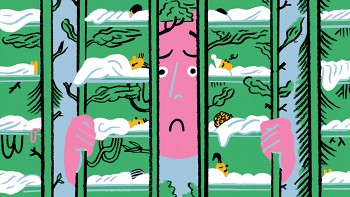
Literally: We’ve not left the hostel!
Equivalent expression: We’re not out of the woods yet
Auberge (hostel) used to be a euphemism for “jail,” which would explain why it’s so difficult to escape. This phrase is used when you’ve made some progress on a difficult situation, but haven’t quite solved it yet.
3. À qui mieux mieux
Literally: To whom better better
Meaning: To outdo someone
This pretty confusing sentence is the short form of this no less confusing sentence: Nous vous aimons à ce point de telle façon que celle qui de nous deux vous aime déjà mieux que l’autre vous aime encore mieux (“We love you that much that the one of us who loves you the best loves you even better than the other one who loves you even better”). Did you get that? Neither did we…
4. Être dans la galère
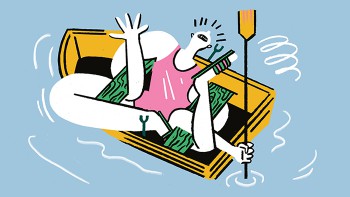
Literally: To be in the galley
Meaning: To get yourself into a mess
The meaning of this expression is close to the second one on this list one, but this time its origin is very clear. The expression was coined by Molière, the iconic 17th century playwright whose works elevated the French language.
5. Il (ne) faut pas pousser mémé dans les orties !
Literally: One shouldn’t push grandma in the nettles!
Meaning: One shouldn’t exaggerate
No matter how much you hate your grandma, don’t ever push her into the bushes. To do so, for any reason, is probably an overreaction. This phrase means something somewhat like “Don’t throw the baby out with the bathwater.”
6. Mettre les points sur les i
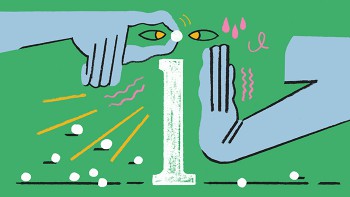
Literally: To put the dots on the I
Meaning: To make things clear
This phrase isn’t too different from its English counterpart: Dot your I’s and cross your T’s. It refers to the little details you add to make sure everything is clear and accurate.
7. Pisser dans un violon
Literally: To piss in a violin
Meaning: To waste your efforts
What could more frustrating than putting your heart and soul into winning the affections of the object of your desire, only to go completely unnoticed? After such a heartbreaking letdown, who can blame you for likening your romantic efforts to “pissing in a violin”? I’m not sure that violinists sanction this expression, though. The closest analog in English might be “To piss into the wind,” which seems slightly less destructive.
8. Ça ne casse pas trois pattes à un canard.
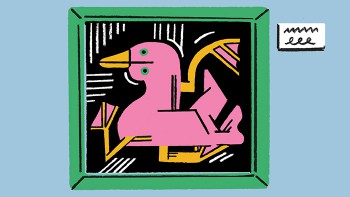
Literally: It doesn’t break three legs to a duck
Meaning: It’s nothing special
You didn’t know that ducks had three legs? Well, now you do. You might use this in the same way as you would say “It’s nothing to write home about,” which makes slightly more sense in our opinion.
9. Chacun voit midi à sa porte.
Literally: Everyone sees noon at his door.
Meaning: To judge a situation based on your own subjective criteria
There’s nothing more objective than time — unless you’re in Fort-de-France and it’s 5 a.m., I’m in Geneva and my watch says 10 a.m., and in Moscow… okay, maybe it’s more relative than I thought. This expression just goes to show that we can all see what we want to, if we’re stubborn enough.
10. Au petit bonheur la chance.
Literally: To little happiness luck
Meaning: With a bit of luck
This sentence means something like “putting yourself in God’s hands,” except that this time, God has left you to chance. Flip a coin and hope for the best!
Illustrations by Kati Szilagyi.
Comment